Reclaim treats architecture as living infrastructure for collective organising, not as static heritage to be preserved. We ask: how can communities use architectural, legal and organising knowledge to reclaim industrial buildings? What governance structures protect reclaimed buildings from future privatisation? And what social and political possibilities open up when communities own the spaces they use?
Slow Routes to Resilliance
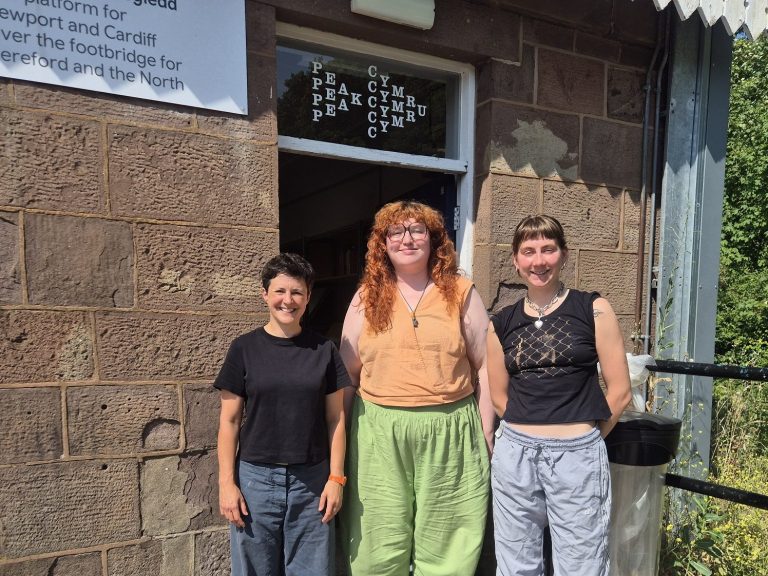
Slow Routes to Resilience is a 1,646-mile cycling research journey from Land’s End to Lerwick, visiting over 30 community-owned venues, artist-run spaces, independent music venues and grassroots organisations across the UK. In summer 2026, Verity and Bobbie completed Part One, cycling 800 miles from Land’s End to Manchester. Part Two will follow in 2027.
Through conversations and encounters along the way, we explored alternative ways of organising culture, from ownership and shared decision-making to long-term care for spaces and communities. At the heart of the research is one question: how many of these examples can be reproduced elsewhere? Travelling slowly and low-carbon, we learned through movement and direct relationships with the places and people we met, and we were overwhelmed by their response and generosity.
What we gathered will feed into a publication and open-resource archive as part of our wider reclaim and govern programme. The archive will be free to access and open to everyone. If this research resonates with you, we’d love you to be part of the process. Please get in touch to share your own experiences of community ownership or any thoughts you have.
Barrowfield Weaving Factory
Built between 1889 and 1899 for muslin manufacturers John Brown & Son, the former Barrowfield Weaving Factory is one of the East End’s best-surviving industrial buildings. It was designed by Miles S. Gibson at a time when Dalmarnock was a centre for weaving, dyeing and bleaching. The labour of the people who worked here is still built into it: the polychrome brickwork, the arched openings, the old weaving sheds.
Buildings like this hold a neighbourhood’s memory. In places going through rapid regeneration, they are also usually the first assets to be sold, converted and closed to the people who gave them meaning. We treat that as a structural problem, not an inevitability.
We ask: what would it take for a building to belong to its community permanently? What happens to a building’s value, social as well as financial, when it stays in local hands? And how do we design ownership that outlasts any one organisation, funder or lease?
Today the Barrowfield Weaving Factory is our main venue, home to Strange Studios, the Factory Floor and Boxing Gym Gallery, workshop space and our open programmes. We hold a 10-year lease and are working towards buying it, moving from tenant to custodian. Through Radical Archiving, we record the memories the building holds. With planners and local government, we argue for industrial heritage as community infrastructure.
Scotland’s Community Wealth Building Act now puts community ownership of land and property into law. The Pipe Factory is where we tested what that looks like in practice. We aim to do the same here in Dalmarnock, and to share what we learn.
The Pipe Factory
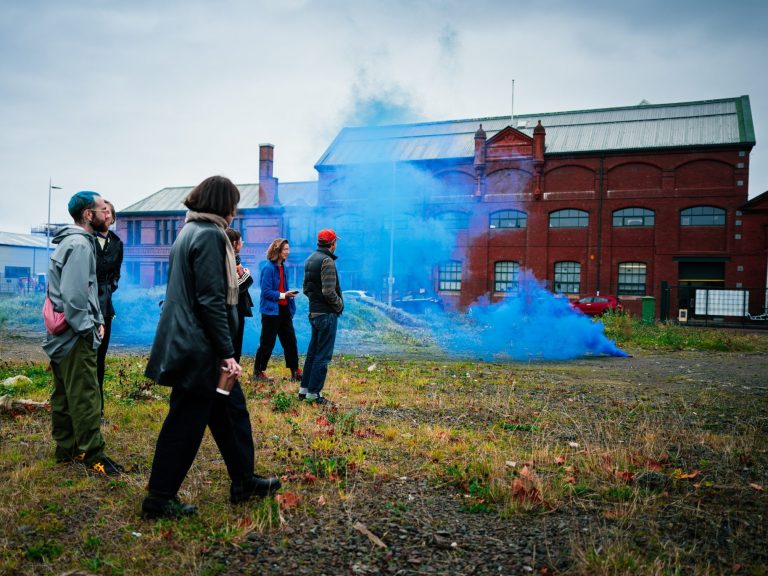
The Pipe Factory on Moncur Street was built between 1876 and 1879 for William White and Son. It was designed by architect Matthew Forsyth, and its three red and white brick buildings contain some of the most intricate, ornate brickwork in Glasgow. It is the last surviving clay smoking pipe factory in Scotland.
In 2021 the building was taken into community ownership. Since then more than £4 million has been raised to restore it. The restoration adds a new lift, low-carbon heating and energy-efficient systems, and a public-facing space at street level. When it reopens, The Pipe Factory will be an open, welcoming place where people of all ages can explore art, culture, architecture and heritage through workshops, community projects and their own creative practice.
The Pipe Factory is where we first tested what community ownership of industrial heritage looks like in practice.
Nippy Sweetie
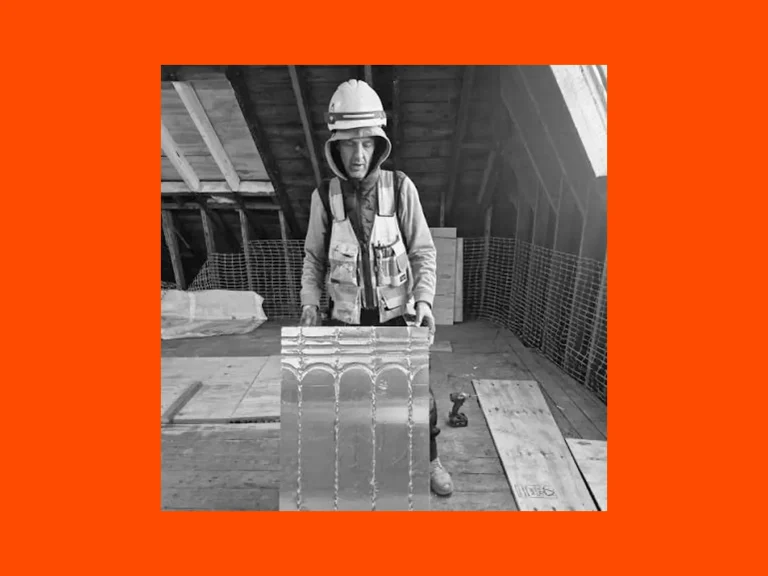
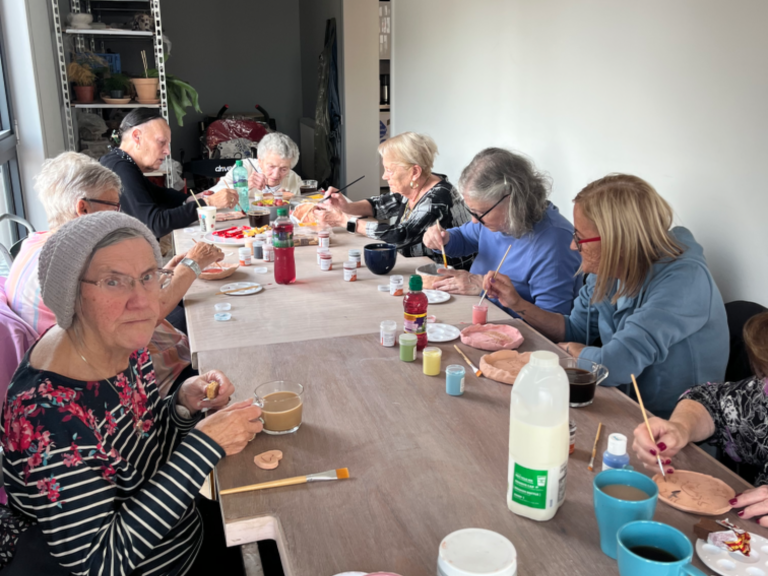
Nippy Sweetie is a community group for people in Calton. Nippy Sweetie grew out of Loom Large in the Community, a creative heritage project for people aged 65 and over, rooted in Glasgow's textile history. Calton's first weavers settled here in 1705, and by the mid-1800s the East End had more than 50 textile factories, including Templeton's Carpet Factory.
It grew faster than we expected. The group has moved on from textiles alone. Members now co-curate their own programme of social history and creative activities, from sharing memories of Calton's streets, factories and market to trying new ways of making. Stories get shared over a cup of tea, and ideas for what happens next start there.
Beyond the Games
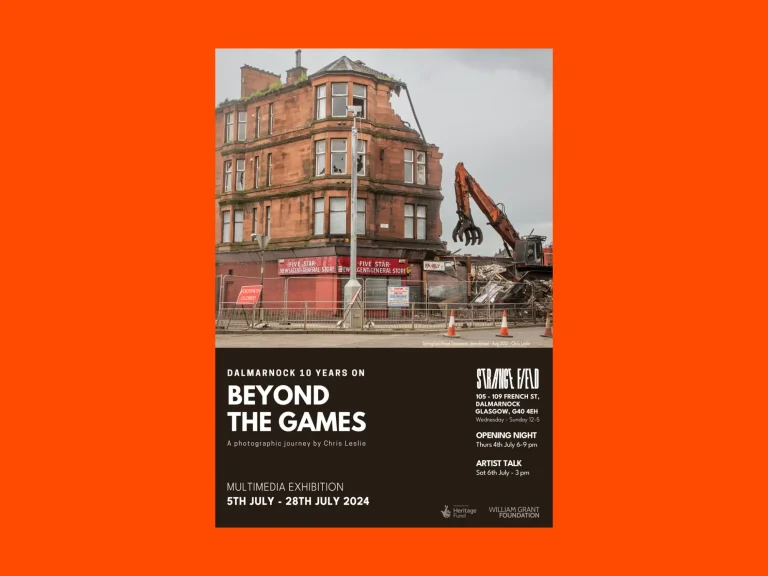
A photographic return to Dalmarnock, ten years after the Commonwealth Games.
Beyond the Games came out of Strange Field’s six-month residency with photographer and filmmaker Chris Leslie in 2024, marking ten years since the Glasgow 2014 Commonwealth Games. Leslie revisited residents, schools and community groups he first photographed for Disappearing Glasgow, his record of Dalmarnock residents being displaced as the area was cleared for the Games. Through photography, film, audio and print, the exhibition asked what the Games’ legacy really meant for the people of Dalmarnock. It drew 600 visitors to French Street. It was supported by the National Lottery Heritage Fund and the William Grant Foundation.
Through our Selected Programme, we offer subsidised space and support from our core team to artists and projects whose work responds to our buildings, their histories and the East End.
The Loom That Broke My Heart
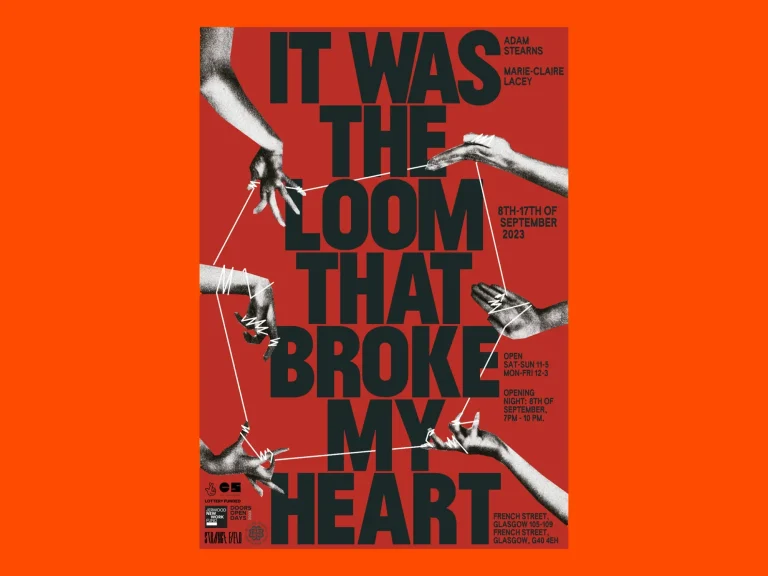
An audiovisual installation responding to French Street’s history as a weaving factory.
Artists Marie-Claire Lacey and Adam Stearns created a multimedia installation in the old weaving shed at French Street. It was built in 1889 as the Barrowfield Weaving Factory. Drawing on research into the building, the work explored its heritage and how industrialisation changed traditional weaving.
Eastern Ground
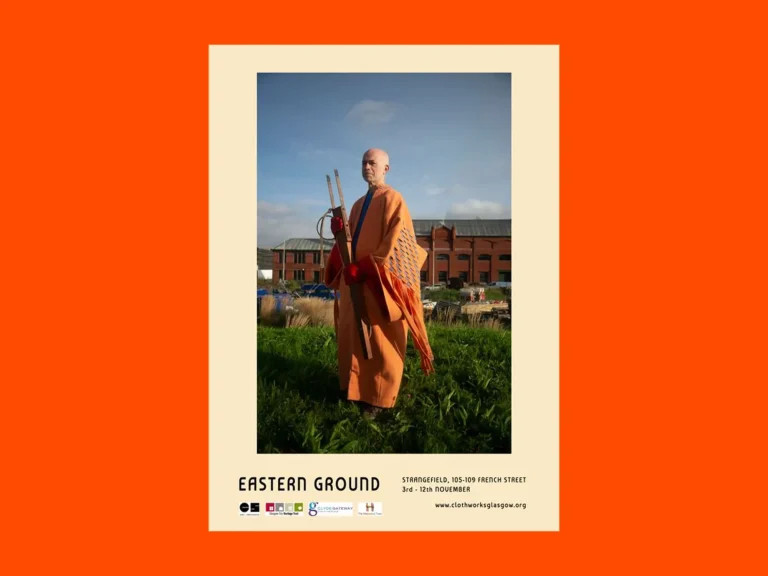
Handmade garments inspired by the historic buildings of Glasgow’s East End.
Bespoke tailor Alis Le May created six garments, each inspired by a historic East End building, working with Clothworks Glasgow. Participants learned textile design, sewing, natural dyeing and printmaking. Eastern Ground first showed at Strange Field in November 2023, before touring to Glasgow City Heritage Trust in 2024.
Contact Us
Telephone: +44 141 554 0563
E-mail: subs@strangefield.org
Address: 105-109 French Street, Glasgow, G40 4EH

Strange Field is a registered Scottish Charity SCIO number SC052132